
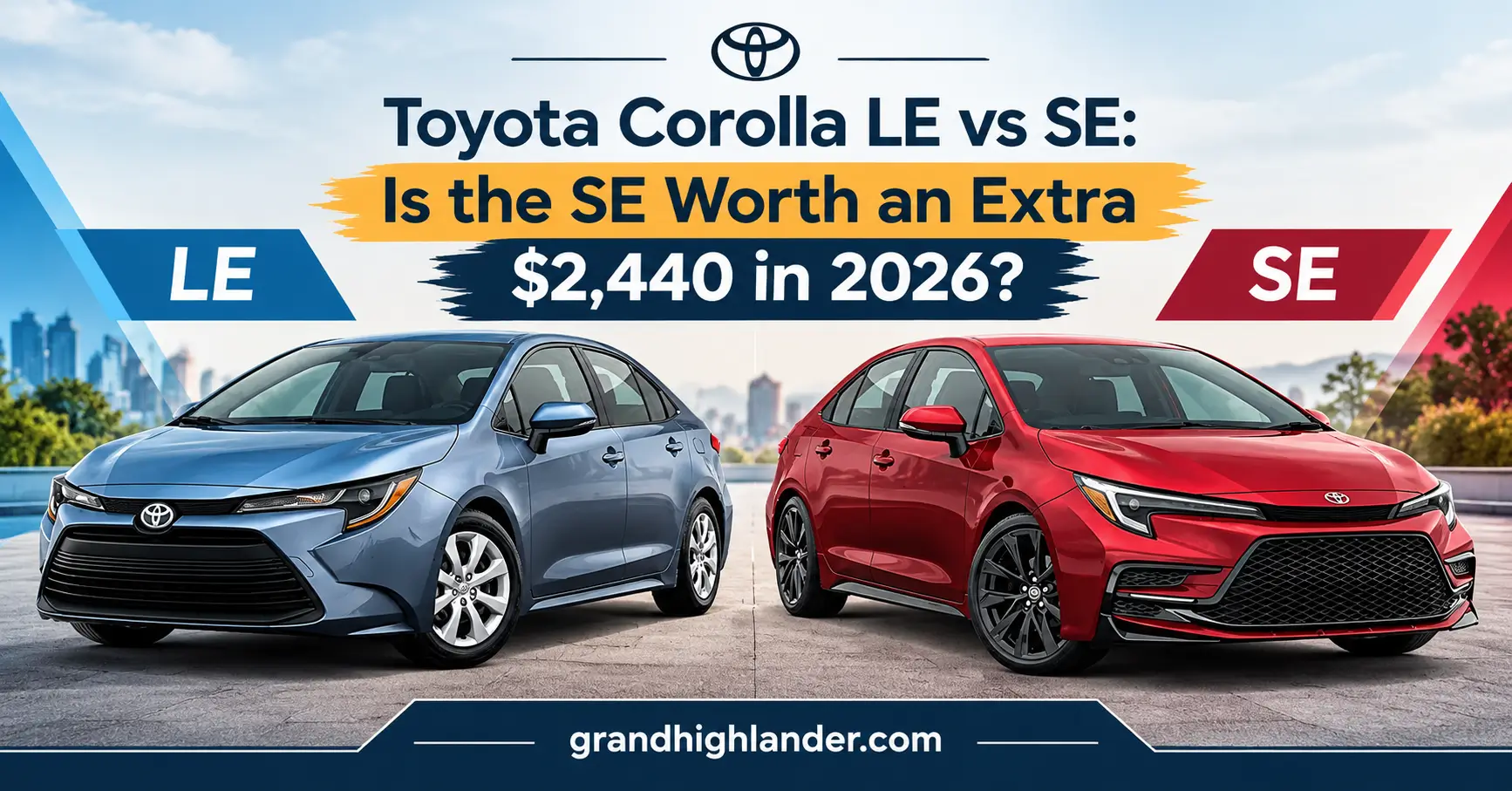
Paying an extra $2,440 for a Toyota Corolla SE might seem reasonable when you see its sporty wheels and aggressive styling. But here is the catch: both the Corolla LE and SE produce the same horsepower, use the same engine, and offer nearly identical fuel economy. So what are you actually getting for the extra money, and could the less expensive LE be the smarter purchase?
The answer depends on more than appearance. Wheel size affects tyre replacement costs, suspension tuning influences ride comfort, and small differences in fuel consumption can add up over years of commuting. The 2026 Toyota Corolla LE and SE share the same basic mechanical foundation, but their equipment and driving character appeal to different buyers.
Here is what separates them, where the SE justifies its higher price, and which trim makes more sense for your money.
Toyota Corolla LE vs SE: Key Specifications
The gasoline-powered Corolla LE and SE share a 2.0-liter four-cylinder engine and continuously variable transmission. Their biggest differences involve wheels, driving modes, interior details, and standard equipment.
| Specification | 2026 Corolla LE | 2026 Corolla SE |
|---|---|---|
| Starting MSRP | $23,125 | $25,565 |
| Engine | 2.0L four-cylinder | 2.0L four-cylinder |
| Horsepower | 169 hp | 169 hp |
| Torque | 151 lb-ft | 151 lb-ft |
| Transmission | CVT | CVT |
| Drivetrain | Front-wheel drive | Front-wheel drive |
| Wheels | 16-inch steel wheels with covers | 18-inch alloy wheels |
| Driving modes | Normal, Eco | Normal, Eco, Sport |
| City fuel economy | 32 mpg | 31 mpg |
| Highway fuel economy | 41 mpg | 40 mpg |
| Combined fuel economy | 35 mpg | 34 mpg |
| Touchscreen | 8 inches | 8 inches |
Specifications and prices apply to the U.S.-market 2026 gasoline models. Final prices and equipment can vary by configuration, destination charges, and optional packages.
Price Difference: What Do You Get for the Extra $2,440?
The 2026 Corolla LE starts at $23,125, while the SE starts at $25,565. That is a $2,440 difference before applicable destination charges, taxes, and optional equipment.
The important question is whether the SE’s additional features are worth paying for.
The SE brings larger alloy wheels, sport-oriented seating, an additional driving mode, and a more distinctive exterior. These are tangible upgrades, but they do not include a more powerful engine.
For a buyer who mainly needs reliable daily transportation, the LE already covers the essentials. Paying more for the SE makes sense when its particular features are things you genuinely want rather than extras that simply look attractive in a showroom.
Consider the cost over a five-year ownership period. The initial $2,440 difference works out to approximately $488 per year, before considering financing costs, depreciation, or differences in running expenses.
That calculation does not make the SE automatically expensive or the LE automatically better. It simply gives you a clearer way to judge whether the additional equipment is worth its cost.
Engine and Performance: Does the SE Actually Drive Better?
Both trims use a 2.0-liter four-cylinder engine producing 169 horsepower and 151 lb-ft of torque. Neither has a horsepower advantage over the other.
That matters because the SE’s sporty appearance can create expectations of substantially stronger performance. In reality, its appeal comes from its driving settings and overall character rather than extra engine output.
What Sport Mode Changes
The LE provides Normal and Eco driving modes. The SE adds Sport mode, which adjusts the vehicle’s response to accelerator inputs and can make acceleration feel more immediate.
This can be useful when merging into highway traffic or when you want a more responsive feel during everyday driving. However, Sport mode does not increase the engine’s maximum rated horsepower.
If you spend most of your time driving through congested streets, the difference may not justify paying extra. Drivers who enjoy a more responsive throttle, on the other hand, may appreciate having the additional setting available.
The key point: Choose the SE for its driving character, not because you expect it to deliver a major increase in acceleration.
Fuel Economy: How Much Does the LE Save?
Fuel economy is one area where the LE has a measurable advantage.
The 2026 Corolla LE is rated at 32 mpg in city driving, 41 mpg on the highway, and 35 mpg combined. The SE returns an estimated 31 mpg in the city, 40 mpg on the highway, and 34 mpg combined.
The difference is small, but frequent drivers may notice it over time.
For example, someone who regularly commutes long distances will generally buy more fuel over the year than someone who drives only a few miles each day. In that situation, even a modest efficiency advantage deserves consideration.
Actual results depend on traffic, driving speed, weather, tyre pressure, and maintenance. Stop-and-go traffic can reduce fuel economy, while steady highway driving may help you get closer to the highway estimate.
If fuel consumption is your main concern, the LE has the advantage among these two gasoline trims. Buyers willing to consider a different powertrain should also compare the Corolla Hybrid LE, which is designed around fuel efficiency rather than the gasoline models’ conventional engine setup.
The Hidden Cost of 16-Inch vs 18-Inch Wheels
The wheels are among the most noticeable differences between the two trims, but their impact extends beyond appearance.
The Corolla LE comes with 16-inch steel wheels and covers. The SE uses 18-inch alloy wheels that give the car a more aggressive stance.
Larger wheels can look appealing, but there are practical trade-offs worth considering before you buy.
Tyre Replacement Costs
The SE’s larger wheels generally require tyres with shorter sidewalls. Depending on the tyre brand, model, and size, replacement tyres can cost more than comparable tyres for the LE.
The difference becomes more important when you need to replace all four tyres rather than just one.
Larger wheels can also be more vulnerable to cosmetic damage from potholes and sharp road edges. A hard impact can damage a tyre or bend a wheel, although the risk depends on the road surface, tyre construction, and driving speed.
If you regularly encounter rough pavement, the LE’s smaller wheels may be a practical advantage.
Ride Comfort
Tyres with taller sidewalls generally provide more cushioning against smaller bumps and road imperfections. This can help the LE feel more forgiving on uneven streets.
The SE’s lower-profile tyres can produce a firmer feel over rough surfaces. Some drivers prefer that more connected sensation, while others would rather have the additional cushioning.
Neither trim is guaranteed to feel better on every road. Tyre specifications, inflation pressure, suspension tuning, and the condition of the road all influence comfort.
If possible, test-drive both trims over the same route before deciding. Pay attention to how each handles broken pavement, speed bumps, and expansion joints rather than judging ride quality on a smooth road alone.
Interior and Technology: Are the Upgrades Useful?
Both trims provide an 8-inch touchscreen with wireless Apple CarPlay and Android Auto compatibility. That means you do not have to choose the SE simply to obtain basic smartphone integration.
The differences are more apparent in seating, convenience equipment, and the overall cabin presentation.
What the LE Offers
The LE has cloth-trimmed seating and a practical interior layout. Its equipment includes automatic climate control, a digital gauge cluster, and Toyota Safety Sense 3.0 driver-assistance technology.
For drivers who mainly use their car for commuting, shopping, and regular family travel, these features cover many everyday needs.
The simpler presentation may also appeal to buyers who prefer function over decorative details.
What Changes in the SE
The SE adds sport seats with distinctive fabric inserts and a Smart Key System with push-button start.
These features make the cabin feel more tailored to the trim’s sporty character. The SE also offers an available 12.3-inch digital gauge cluster, depending on configuration.
Still, the larger digital display is not something every driver needs. If you primarily use the central touchscreen for navigation and music, the standard equipment may already do everything you expect.
Before paying for a higher trim, separate the features you will use regularly from the ones that simply sound impressive on a specification sheet.
Safety: Does Paying More Mean Getting a Safer Corolla?
Not necessarily.
Both trims include Toyota Safety Sense 3.0, which brings a range of driver-assistance features designed to help drivers identify potential hazards and respond to changing traffic conditions.
The 2026 Corolla also includes features such as Blind Spot Monitor with Rear Cross-Traffic Alert.
Blind Spot Monitor can help you detect vehicles approaching in adjacent lanes, while Rear Cross-Traffic Alert can warn you of approaching traffic when reversing out of a parking space.
These systems are useful additions, but they do not replace checking mirrors, looking over your shoulder, or remaining attentive.
Because the two trims share many core safety technologies, the SE’s higher price should not be treated as proof that it is inherently safer. Check the equipment fitted to the particular vehicle you intend to buy, especially if an optional package is involved.
Toyota Corolla LE vs SE: Which Trim Should You Buy?
The best choice comes down to how you prioritize your money, comfort, and driving preferences.
Choose the Corolla LE If:
- You want to keep the purchase price lower.
- You prioritize fuel efficiency over sporty styling.
- You prefer smaller wheels and potentially less expensive replacement tyres.
- You regularly drive on uneven or damaged roads.
- You want useful technology without paying for features you may rarely use.
The LE is a sensible option for commuters, first-time buyers, students, and anyone who wants a straightforward compact sedan.
Choose the Corolla SE If:
- You prefer a more aggressive exterior design.
- You like the appearance of 18-inch alloy wheels.
- You want Sport mode in addition to Normal and Eco.
- You appreciate the sport seats and push-button start.
- You are comfortable with the potential extra cost of larger replacement tyres.
The SE is a good fit for drivers who want their everyday car to have a more distinctive look and a slightly more engaging driving character.
Is the SE Worth the Extra Money?
The SE is worth considering if you will genuinely enjoy its styling, seating, and additional driving mode throughout ownership.
However, if you mainly care about getting from one place to another economically, the LE offers the same engine output and nearly the same fuel economy without the higher starting price.
There is no reason to pay for features you do not value. Equally, saving money is not the only sensible goal if the SE’s upgrades are important to you.
The smartest purchase is the trim that meets your needs without putting unnecessary pressure on your budget.
Related: 2026 Toyota Corolla Hybrid: Price, Specs, MPG and Trims
Conclusion
The Toyota Corolla LE and SE are built around the same basic mechanical package, but they cater to different priorities.
The LE is the practical choice for buyers who want a lower purchase price, slightly better fuel economy, and smaller wheels that may be more suitable for rough roads. The SE offers a sportier appearance, distinctive seating, and an additional driving mode, but those upgrades come with a higher initial cost and potentially more expensive tyres.
Before making a decision, compare the actual prices, available equipment, and tyre replacement costs for the cars you are considering.
If value and everyday practicality matter most, start with the LE. If you genuinely prefer the SE’s styling and features, the extra cost may be justified.
FAQs
What is the main difference between the Corolla LE and SE?
The LE focuses on practical equipment and value, while the SE adds sportier styling, 18-inch alloy wheels, sport seats, and Sport driving mode. Both gasoline versions use the same 2.0-liter engine.
Is the Corolla SE faster than the LE?
Both produce 169 horsepower and 151 lb-ft of torque. Sport mode makes the SE’s throttle response feel more immediate, but it does not increase maximum engine output.
What is the starting price of the 2026 Corolla LE?
The 2026 gasoline-powered Corolla LE starts at $23,125 in the United States, before applicable destination charges, taxes, and optional equipment.
What is the starting price of the 2026 Corolla SE?
The 2026 gasoline-powered Corolla SE starts at $25,565 in the United States. The final purchase price depends on equipment, dealer charges, taxes, and available offers.
Which Corolla gets better gas mileage?
The LE is rated at 35 mpg combined, compared with 34 mpg combined for the SE. Actual fuel consumption varies with driving conditions and maintenance.
Are the Corolla SE’s 18-inch wheels worth it?
They provide a sportier appearance, but replacement tyres may cost more, and shorter sidewalls offer less protection against some road impacts. The smaller wheels on the LE may be more practical for drivers who frequently encounter potholes.
Is the Corolla LE more comfortable than the SE?
The LE’s smaller wheels and generally taller tyre sidewalls can help absorb road imperfections. However, comfort also depends on suspension tuning, tyre pressure, road conditions, and personal preference.
Does the Corolla SE have better technology?
Both trims include an 8-inch touchscreen and wireless smartphone connectivity. The SE adds selected convenience features and offers an available 12.3-inch digital gauge cluster, depending on configuration.
What is the difference between the Corolla LE and SE Hybrid?
The Hybrid LE and Hybrid SE use a hybrid powertrain, so their engine specifications and fuel economy differ from those of the gasoline models. The LE prioritizes efficiency, while the SE adds sport-oriented styling and equipment.
Which Toyota Corolla trim is best for daily driving?
The LE is a strong choice if you prioritize affordability, efficiency, and practical transportation. The SE is better suited to drivers who value sportier styling, larger wheels, and additional driving features.





Leave a Reply